
Diwali Health Tips 2026: A Safe and Healthy Diwali Guide for the Whole Family
November 2, 2026 · Caroline Healthcare
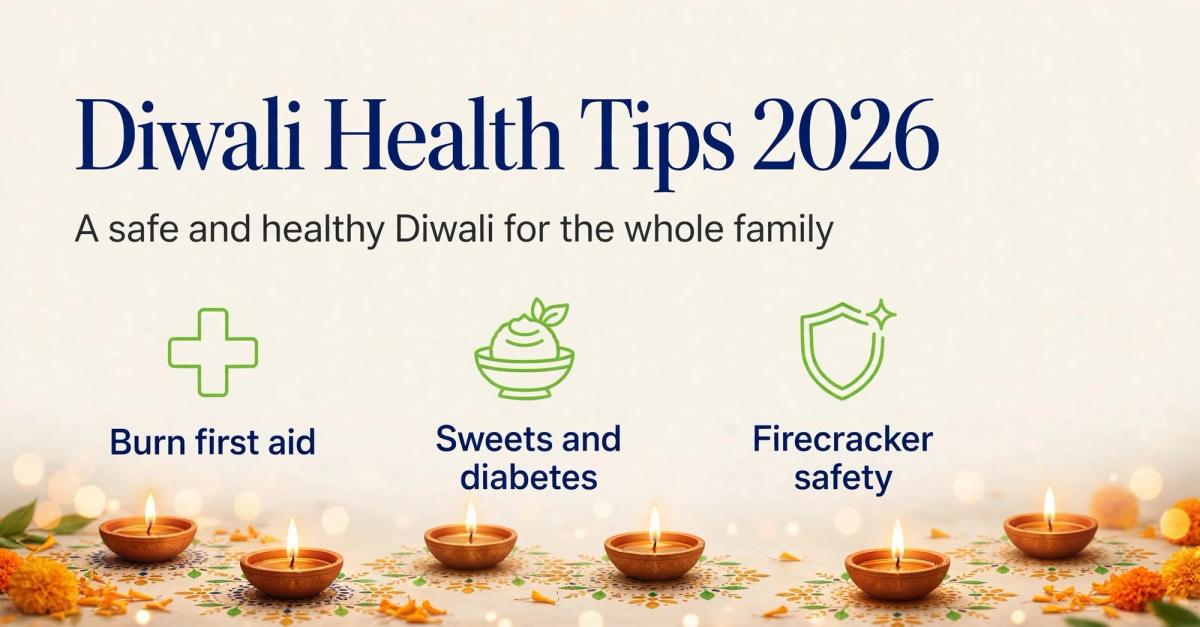
Diwali health tips for the whole family: firecracker safety, burn first aid, asthma and smoke, sweets and diabetes, and care for seniors.
Diwali 2026 falls on Sunday, 8 November, and the five-day festival begins with Dhanteras on 6 November. It is a time for lights, family and mithai, but it can also bring avoidable health problems: firecracker burns, breathing trouble from smoke, sugar spikes, stomach upsets and tired grandparents. With a little planning, everyone can enjoy the festival safely.
This guide brings together the most useful Diwali health tips in one place: firecracker safety, burn first aid, asthma and smoke, Diwali sweets and diabetes, festive food safety, care for senior citizens and a simple first-aid checklist for your home.
Diwali Health Checklist: 10 Quick Tips
1. Keep a bucket of water or sand close to wherever fireworks are lit.
2. Light fireworks only outdoors, with an adult, from a safe distance.
3. Wear snug cotton clothes and closed footwear. Keep loose synthetic clothes, dupattas and sarees away from flames.
4. Learn burn first aid: cool the burn under running water for 20 minutes, and never use ice or butter.
5. Keep inhalers and regular medicines within easy reach.
6. Keep windows closed when smoke is heavy and wear a well-fitted N95 mask outdoors.
7. Enjoy mithai in small portions, and check blood sugar more often if you have diabetes.
8. Buy sweets from trusted shops and refrigerate milk-based mithai.
9. Stock up on regular medicines before the festival holidays.
10. Save emergency numbers, starting with 112.
Firecracker Safety Tips for Children and Adults
Most firecracker injuries can be prevented. These simple rules help:
- Children should never handle fireworks without an adult watching closely.
- Light one firework at a time, using a long incense stick or lighter, and move away at once.
- Never relight a firework that did not go off. Pour water over it and leave it.
- Never carry fireworks in your pocket or hold them in your hand while lighting.
- Keep babies, older adults and pets indoors, away from the noise and smoke.
- Follow local rules and guidelines on which crackers are permitted in your area.
Firecracker Burns: First Aid at Home
If someone is burnt, stay calm and act quickly:
- Move the person away from the source of the burn.
- Cool the burn under cool or lukewarm running water for 20 minutes, as soon as possible. Take off rings, watches and loose clothing near the burn, unless something is stuck to the skin.
- Do not use ice, ice water, butter, ghee, oil, toothpaste or other home remedies. They can make the injury worse.
- Do not burst blisters.
- After cooling, cover the burn loosely with clean cling film or a clean, non-fluffy cloth. Do not put cling film on the face.
- Keep the person warm, especially children and older adults.
Go to a hospital or call 112 if the burn is larger than the person’s palm, is on the face, hands, feet or joints, looks deep, white or charred, or if the person is a child or an older adult, is in severe pain or has trouble breathing.
Eye Injuries from Crackers: What to Do
Eye injuries are among the most serious Diwali accidents. If a spark or particle gets into the eye:
• Do not rub, press or try to remove anything stuck in the eye.
• Cover the eye loosely with a clean paper cup or shield.
• Go to an eye hospital or emergency department straight away.
• Do not put in drops or ointment unless an eye doctor advises it.
Stand well back from fireworks, and keep children at a safe distance.
Diwali Smoke, Asthma and Breathing Problems
Firework smoke can trigger coughing, wheezing and breathlessness, especially in people with asthma, COPD or heart conditions, and in children and older adults.
- Keep the inhaler and any prescribed rescue medicine close, and take regular medicines on time.
- Stay indoors with windows closed when the air is smoky, and open them briefly when it clears.
- Wear a well-fitted N95 mask if you have to be outside near fireworks.
- Avoid standing close to bursting crackers or crowded firework areas.
See a doctor soon if cough or wheeze keeps getting worse. Call 112 or go to hospital straight away for severe breathlessness, chest pain, bluish lips or confusion.
Diwali Sweets and Diabetes: Enjoying Mithai Without Sugar Spikes
You do not have to miss the festival if you have diabetes. A few habits help:
- Keep portions small. One small piece of mithai is easier on blood sugar than several.
- Many people find it better to have sweets after a meal rather than on an empty stomach.
- Go easy on fried snacks, which add extra calories and fat.
- Check blood sugar more often during festival days, and keep to your usual meal times.
- Never skip medicines or insulin to make up for sweets, and never change doses on your own.
- Remember that sugar-free mithai is not calorie-free or carbohydrate-free. Ask your doctor or dietitian what suits you.
- If you plan to fast on any festival day, ask your doctor about your medicines first.
Festive Food Safety: Avoiding Stomach Infections
Festive weeks mean lots of sweets, snacks and leftovers, which can cause food poisoning if they are not handled well.
- Buy mithai from trusted shops, choose fresh items and avoid sweets kept uncovered for long.
- For packaged sweets and snacks, check the label, the date and the FSSAI licence number.
- Keep milk-based sweets, such as those made with khoya, paneer or cream, in the fridge.
- Do not leave cooked food out for hours, and wash your hands before eating or serving.
- Drink safe water and keep ORS sachets at home.
See a doctor if vomiting, diarrhoea or fever lasts more than a day, or sooner for children and older adults.
Diwali Health Tips for Senior Citizens
The festival can be tiring for older family members. Loud noise, crowds, smoke and late nights can upset their routine.
• Keep to the usual medicine and meal times, and make sure they drink enough water.
• Give them a quiet, smoke-free room to rest, with windows closed in the evening.
• Go easy on oily, sugary and salty food, especially for those with diabetes, high blood pressure or heart problems.
• Avoid crowded places and firework displays. For people with heart or lung conditions, smoke and loud noise can be especially stressful.
• Keep a list of medicines, the doctor’s number and a family contact on the fridge or near the bed.
• Refill regular medicines before the holidays, since some pharmacies and clinics keep shorter hours.
If your parents will be home alone while the family travels, plan ahead for a caregiver or regular check-ins.
Quick Tips for Children, Pregnant Women and Heart or Lung Patients
• Children: supervise closely, and keep them well back from fireworks.
• Pregnant women: stay away from smoke, loud crackers and crowded places, and keep your doctor’s number handy.
• People with heart or lung conditions: avoid smoky areas, take medicines on time and rest well.
Staying Well During Festival Week: Sleep, Stress and Routine
• Try to sleep at normal hours, even during late-night celebrations.
• Drink plenty of water and go easy on tea, coffee and fizzy drinks.
• Take a short walk after big meals.
• Make time to rest between visits, travel and cooking.
Diwali First-Aid Kit Checklist
Keep a small box ready at home:
- Clean cling film and sterile gauze
- Bandages and medical tape
- Antiseptic wipes
- ORS sachets
- A digital thermometer
- Regular medicines, inhalers and any pain reliever your doctor has advised
- A card with emergency numbers and the family doctor’s number
Emergency Numbers to Save Before Diwali
For any emergency, call 112. Also save the number of your nearest hospital’s emergency department and your family doctor. For home healthcare enquiries, not emergencies, you can call Caroline Healthcare on 1800 103 3374.
When Home Healthcare Can Help During Festival Season
Festival weeks can be hard when elders are alone, a family member is recovering, or you cannot reach a hospital easily. Home healthcare can help when someone:
• Needs regular nursing care, medicines or monitoring
• Is recovering after surgery or a hospital stay
• Needs physiotherapy or medical equipment at home
• Needs a doctor’s visit at home
At Caroline Healthcare India, we provide home healthcare in Delhi NCR, including doctor visits at home, nursing care, physiotherapy, ECG and lab tests, and medical equipment rental. Service availability varies by location, so please call 1800 103 3374 or visit www.carolinehealthcare.com to confirm what is available in your area.
Frequently Asked Questions
How do I treat a firecracker burn at home?
Cool the burn under cool or lukewarm running water for 20 minutes, then cover it loosely with clean cling film or a clean cloth. Do not use ice, butter, oil or toothpaste. Go to hospital for large, deep or facial burns, or burns in children and older adults.
Can I put ice on a burn?
No. Ice or ice water can damage the skin further. Use cool running water instead.
Which Diwali sweets are safe for people with diabetes?
No sweet is automatically safe. Portion size, timing and your overall diet matter most, so ask your doctor or dietitian what suits you, and check your blood sugar more often during the festival.
How can elderly people stay safe during Diwali?
Keep their routine and medicines on time, give them a quiet and smoke-free room, avoid crowds and loud firework areas, and keep emergency numbers within reach.
What should asthma patients do during Diwali?
Keep inhalers and prescribed medicines handy, stay indoors when the air is smoky, wear an N95 mask outdoors, and call the doctor if symptoms get worse.
How can I protect children from firecracker injuries?
Watch them closely at all times, keep them at a safe distance, make sure they wear snug cotton clothes and footwear, and never let them light fireworks alone.